
Earlier this summer, many of you, our wonderful supporters, responded to our appeal to help our veterinary teams continue reaching working donkeys and horses across the West Bank.
So this week, I wanted to show you some of the care your donations are helping to provide.
Dr Eyad and our Hebron team recently travelled to Al Thahreya, where 10 working donkeys and horses were waiting for treatment – including two donkeys who needed particular help.
Thank you, as always, for being there for them.
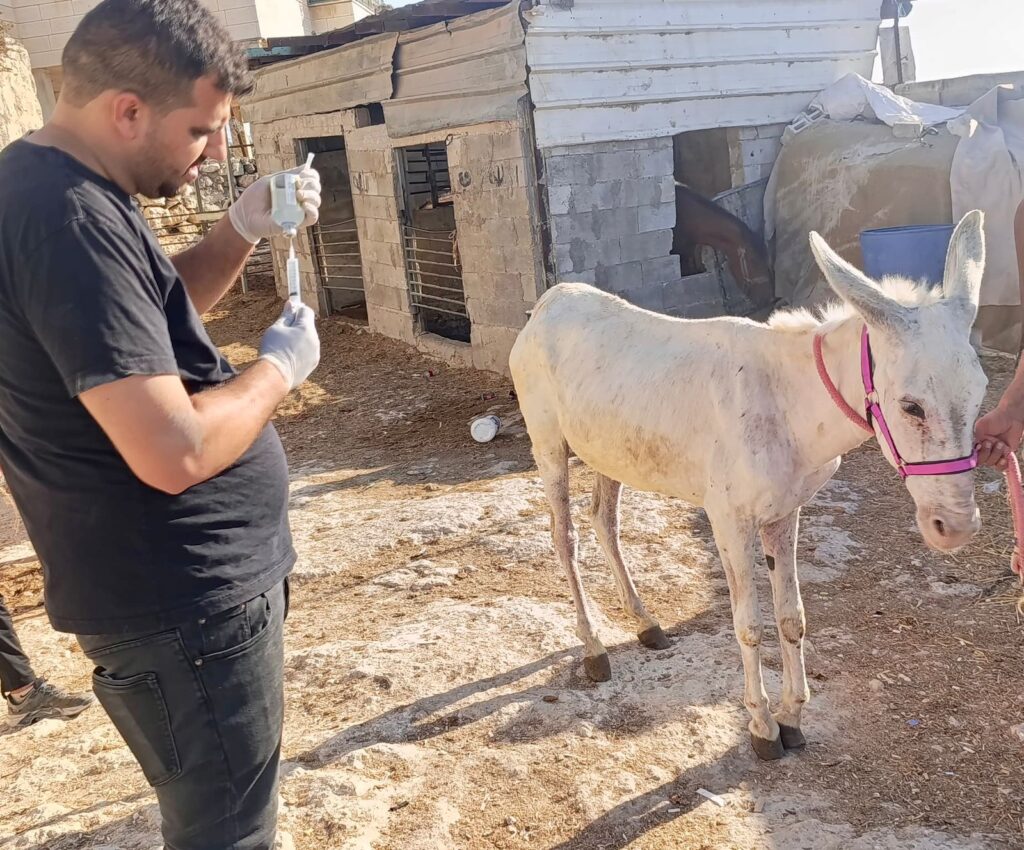
Update from Hebron in the West Bank – 3rd September 2026
Our Hebron vet team is just one of our three mobile veterinary units in the West Bank, travelling out to communities to provide essential veterinary care.
On their recent visit to Al Thahreya, Dr Eyad treated 10 working donkeys and horses – care made possible by the donations we received following our West Bank appeal this summer.
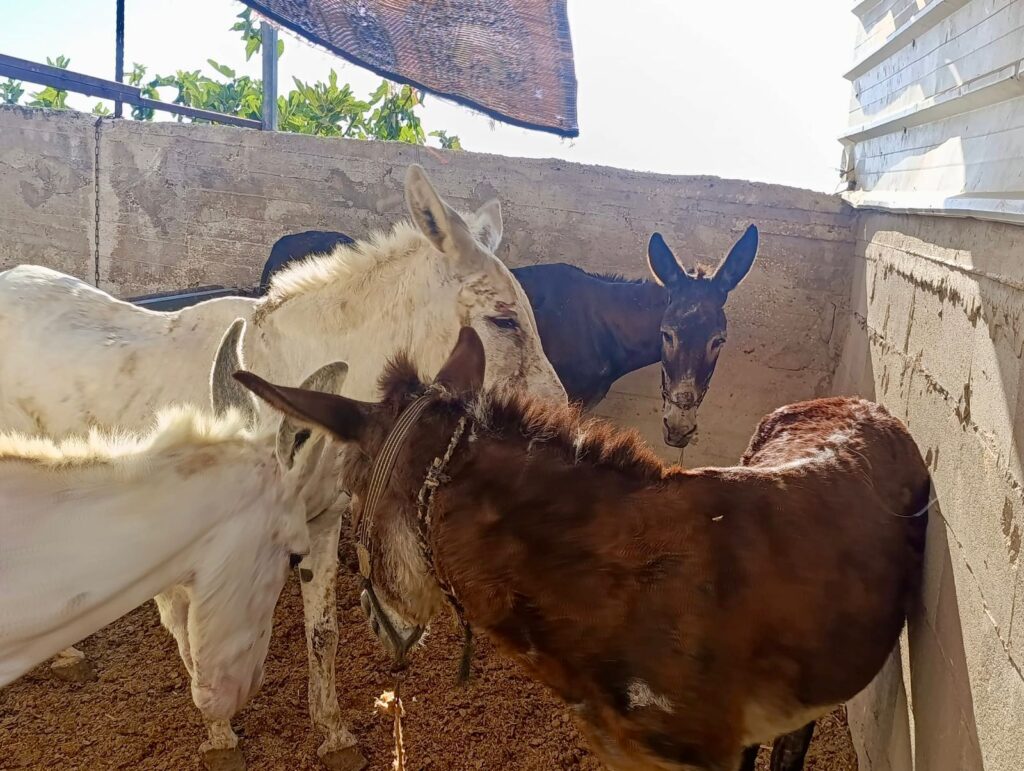
Working donkeys wait to be seen by Dr Eyad and our Hebron veterinary team in Al Thahreya.
One donkey immediately gave Dr Eyad cause for concern. His ears were held unusually upright, his muscles had become stiff and he was struggling to walk normally. The protective third eyelids at the inner corners of his eyes were also drawn across his eyes.
Together, these were worrying signs of tetanus, a potentially life-threatening disease which can develop when bacteria enter the body through a wound – sometimes something as small as a puncture from a nail or other sharp object.
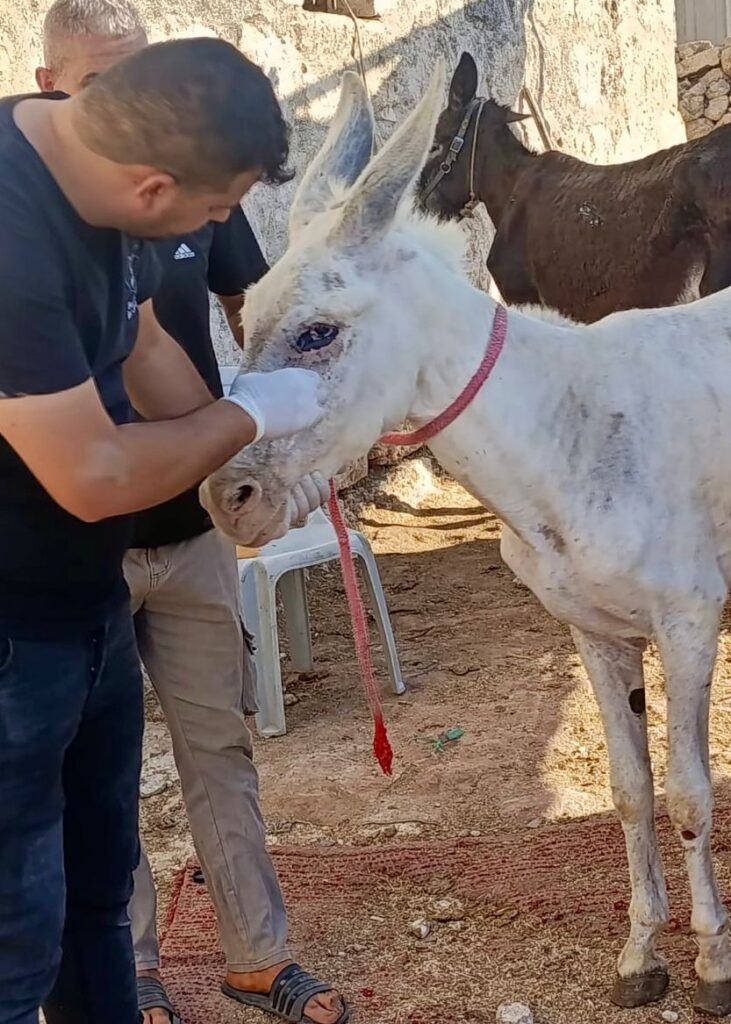
The donkey’s erect ears, muscle stiffness and difficulty walking were all warning signs of tetanus.
With symptoms this serious, Dr Eyad needed to act quickly. He gave the donkey antibiotics, including penicillin, together with strong pain relief and medication to help relax his rigid muscles.
The team’s care doesn’t end when they leave the village. They will remain in contact with his owner and monitor how he responds to treatment. We will of course keep you updated on his progress, when we can.
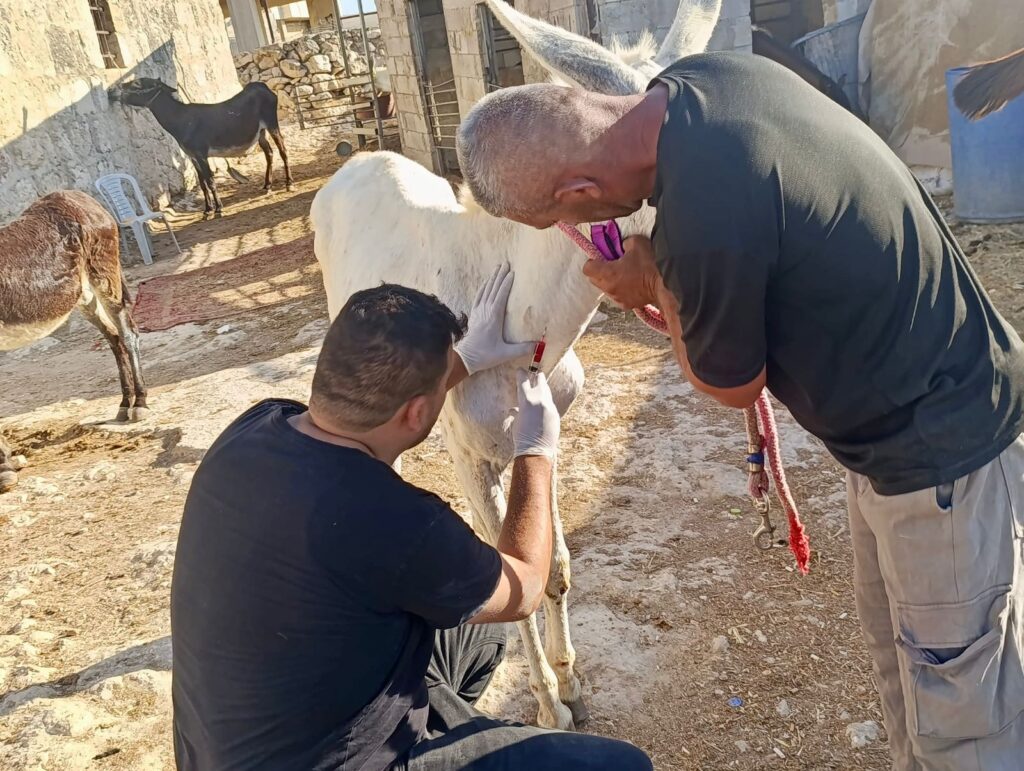
Dr Eyad gives the donkey the medication he urgently needs. The team will continue to check on his progress.
The team also treated a donkey with a severe eye infection and significant discharge around his eye. Dr Eyad suspected habronemiasis – sometimes known as summer sores.
The condition is caused by fly larvae and can result in painful, persistent sores, including around the eyes. He carefully cleaned the affected area before applying ointment and giving further medication to tackle the condition and keep the donkey comfortable.
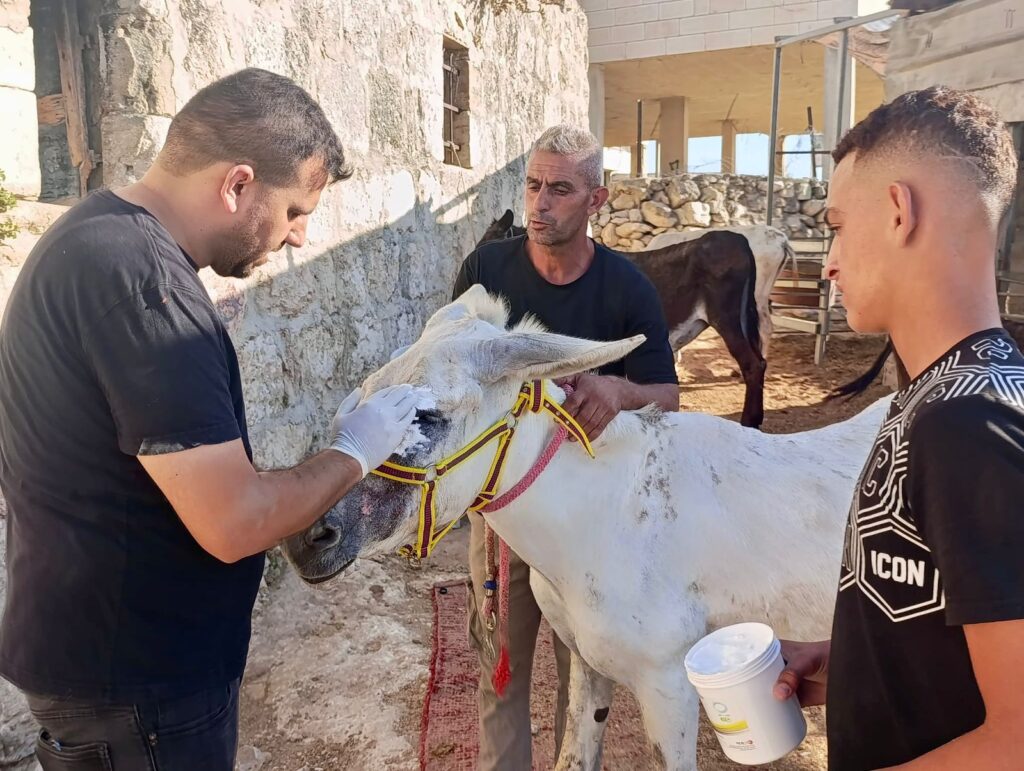
Dr Eyad carefully treats the painful sores around the donkey’s eye.
Thank you ♥️♥️
Visits like this are why your response to our West Bank appeal in July and August mattered so much.
Your donations are helping Dr Eyad and our other veterinary teams travel to communities where working animals need them, providing medicines and skilled veterinary treatment when a donkey becomes sick or injured.
Thank you for helping us continue to be there for them.
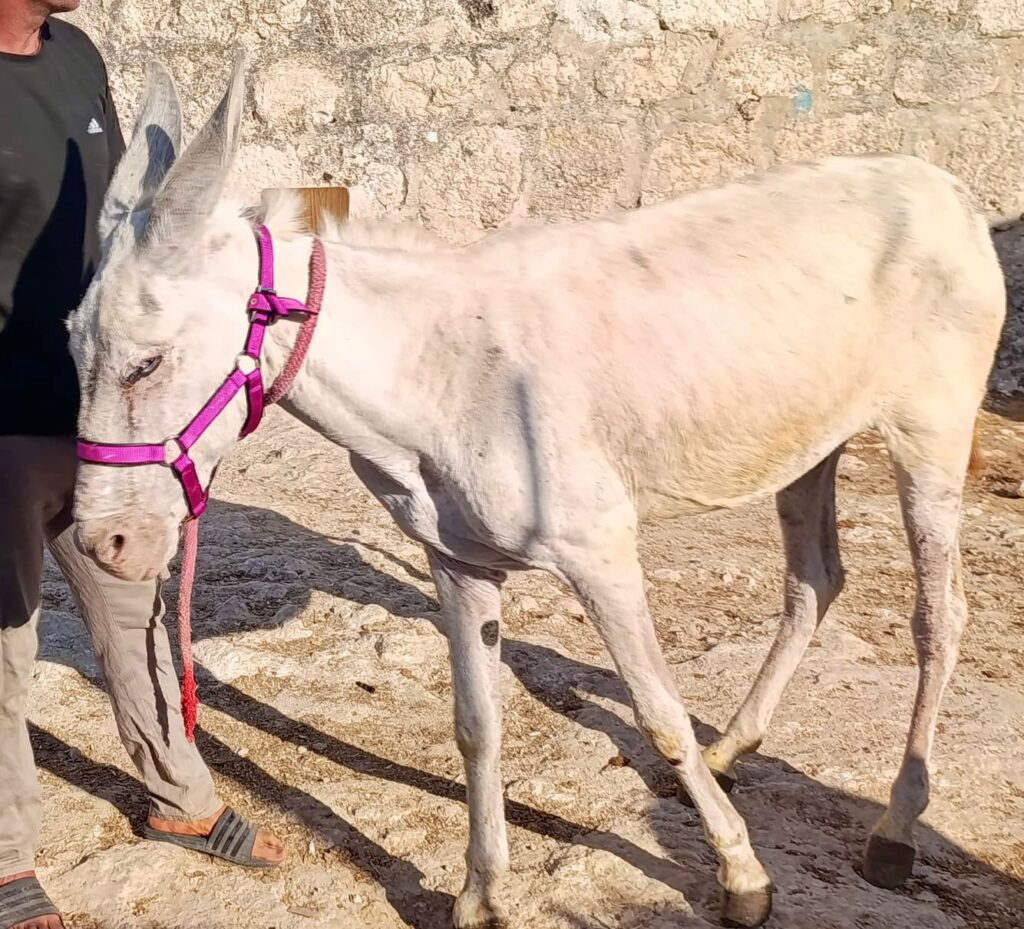
Our Hebron vet team will remain in close contact with the donkey’s owner, to check on his progress. We will keep you updated. Thank you for helping so many donkeys in need.