
I wanted to share an update from Dr Ahmed Thabet and our veterinary team in Gaza.
For many injured donkeys, the first visit is only the beginning. As Dr Ahmed’s update shows, checking on an animal and treating them again can make a real difference to their recovery.
Next month, we’ll share more about the team’s work and the challenges they face. For now, thank you for helping them care for Gaza’s working animals.
Update from Gaza – 24th September 2026
On one recent day, 12 working animals came to us for treatment. Most had visited before. Over the past two months, around a third of our cases had remained open because owners had been unable to bring their animals back to complete their care.
We began calling them to check in, explain that treatment is free, and asking them to return. Seeing so many familiar faces that day was encouraging.
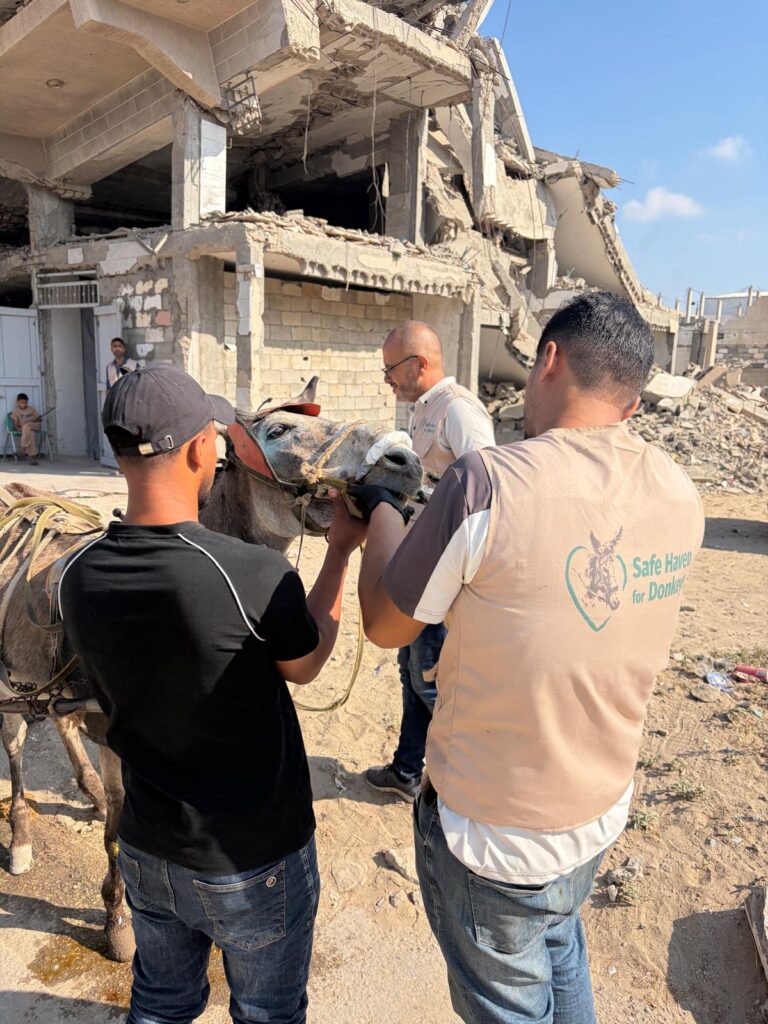
The team examines a returning patient. By keeping in touch with owners, they can check how injuries are healing and provide further treatment.
One was a five-year-old donkey who had slipped while carrying a heavy load, leaving painful grazes on her knees. We first treated her in August, but three weeks later her wounds were healing more slowly than we had hoped.
We treated her again and gave her owner wound spray to use at home. We’ve asked him to bring her back so we can keep an eye on her recovery.
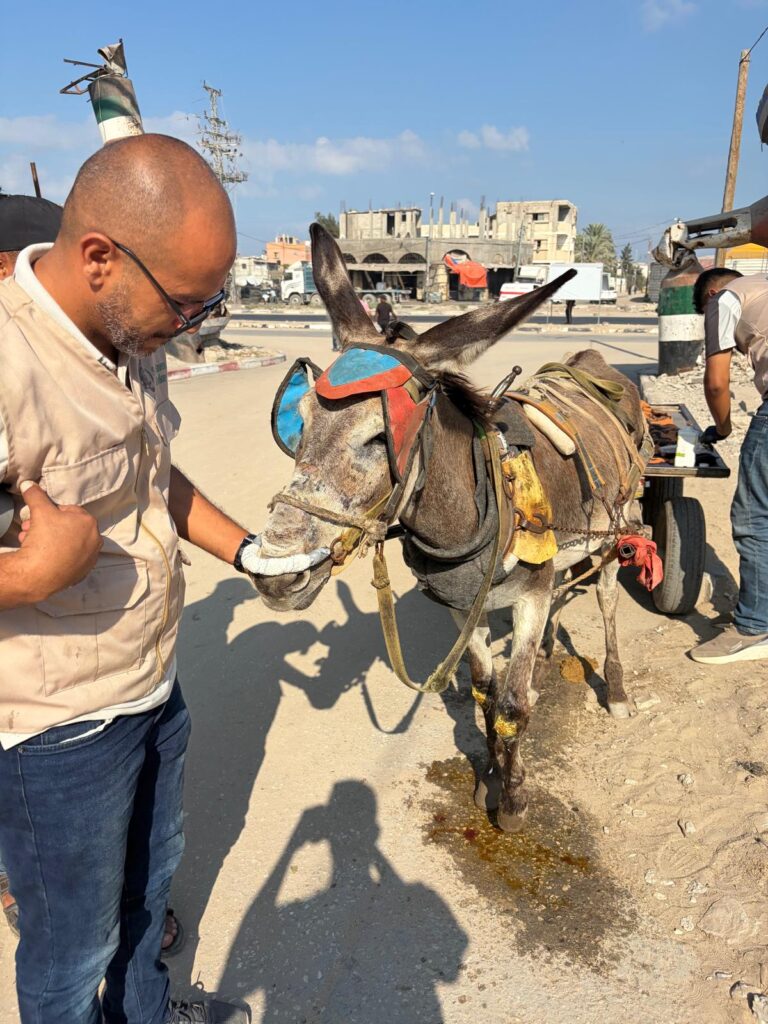
Dr Ahmed checks the donkey’s knees when she returns to the team.
Another returning patient had a painful abscess. Two days earlier, we had carefully removed dead skin around the wound. When she came back, we could already see a remarkable improvement.
It was heartening to see, though she still needs us to check that the wound continues to heal.
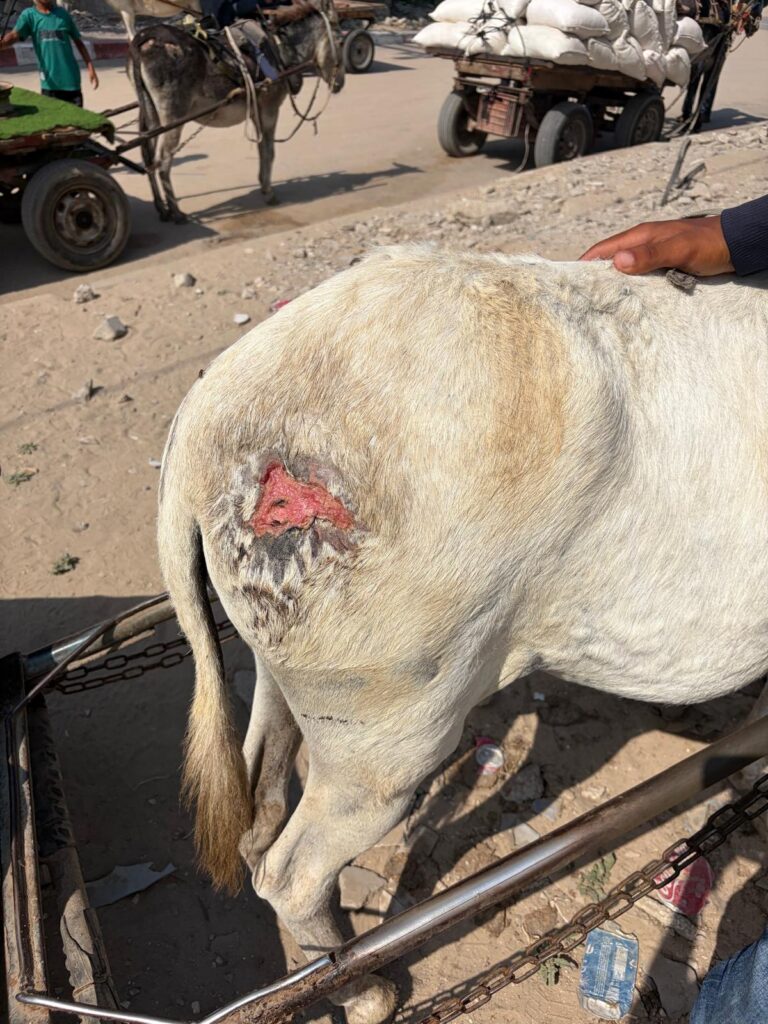
The team checks how the donkey’s wound is healing after her earlier treatment.
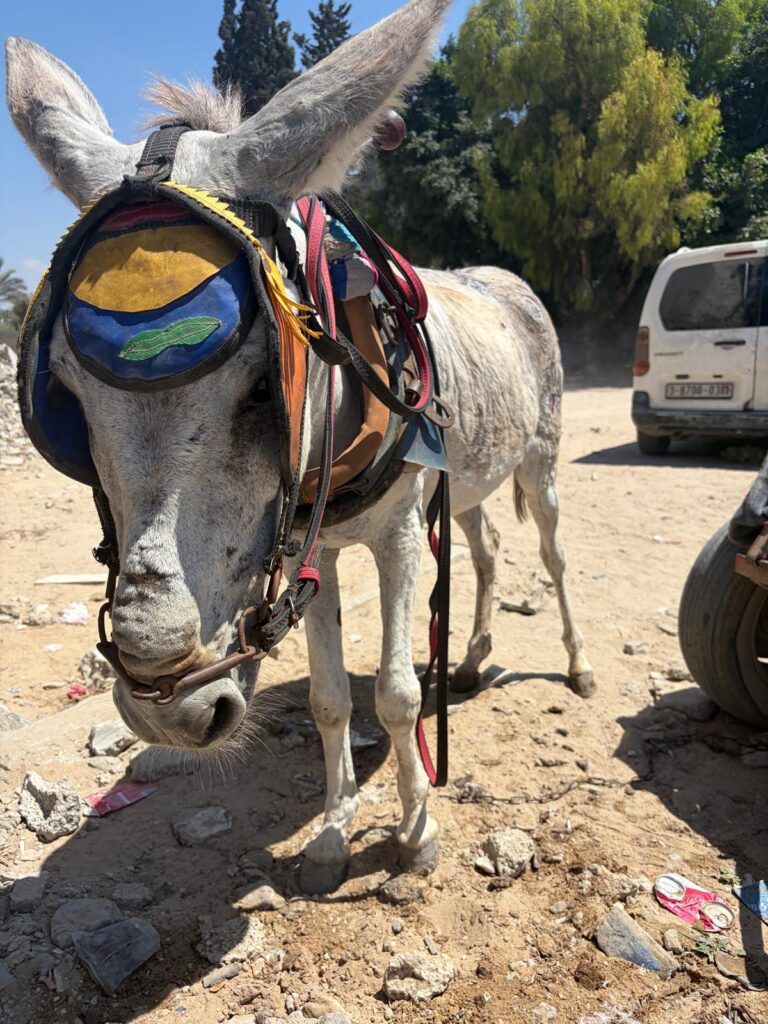
Another donkey returned with wounds caused by fragments from an explosion near her owner’s home six months ago (pictured above and at the top of this email). Although the injuries were relatively shallow, rubbing from her harness has made them difficult to heal.
We treated her wounds again and added soft padding to her metal noseband to protect her from further injury. Her wounds are beginning to improve, and we’ll keep checking her progress when she returns.
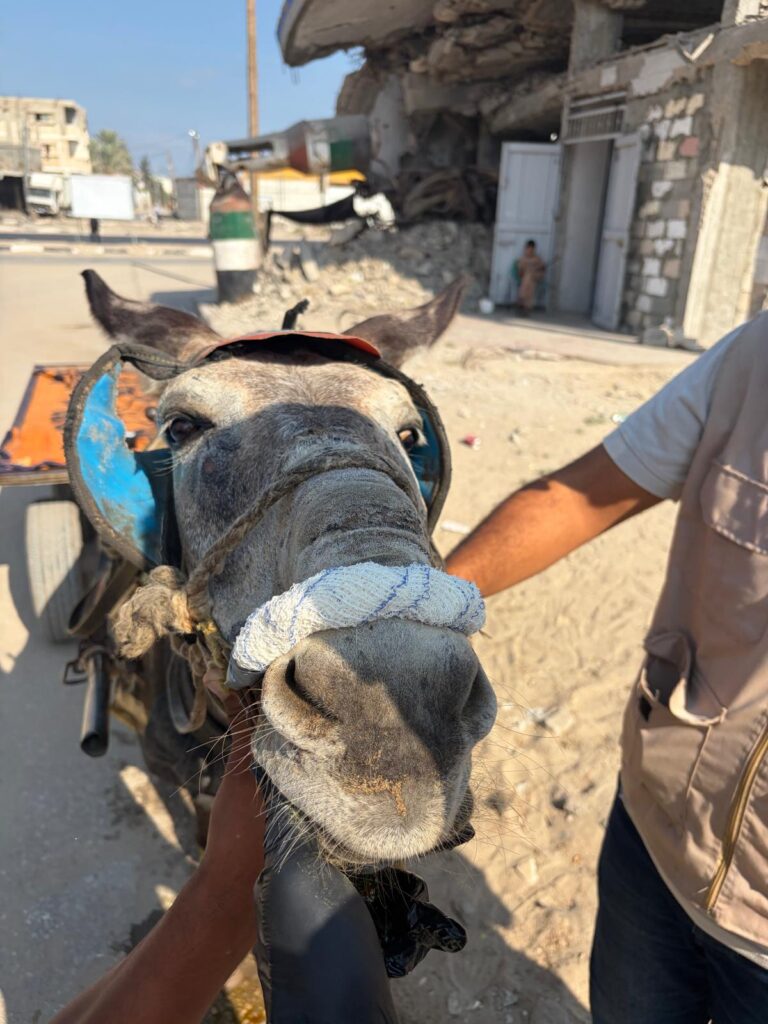
Dr Ahmed adds padding to her metal noseband to help protect her from another painful injury.
Seeing these donkeys come back, and seeing their wounds begin to heal, means a great deal to our team. Some still have a long way to go.
Thank you for making it possible for us to keep treating them and to be here when they need us again. Dr Ahmed Thabet.
Thank you ♥️♥️
We hope Dr Ahmed’s update has shown what it takes to care for an injured donkey in Gaza – from the first veterinary treatment to the return visits that help wounds completely heal.
Your support helps provide free veterinary care when donkeys, mules and horses need it, across Gaza, the West Bank and Egypt, while caring for rescued donkeys at our sanctuaries.
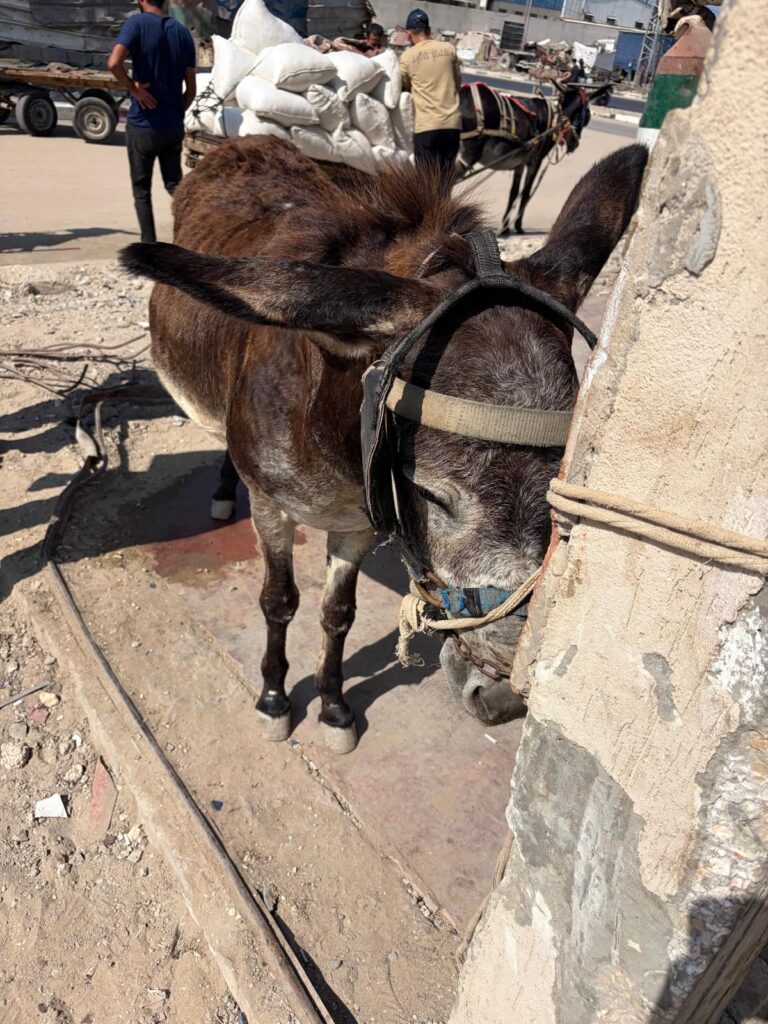
Our Gaza vet team are working tirelessly to help working animals in need – just like this donkey. Thank you for supporting our work. It really does make a world of difference to the donkeys, mules and horses you’re helping.