
This week, we’re catching up with Dr Ahmed and our veterinary team in Gaza, where your kindness is helping injured donkeys receive their skilled and patient care.
Below, we share the story of one donkey whose treatment is continuing, and explain why working donkeys in Gaza wear blinkers.
And please look out for our email over the weekend to launch our Christmas appeal – to help more injured donkeys in Gaza receive the care they need. We’ll show you the difference your kindness could make, from their first treatment through to the follow-up visits that help them heal.
Thank you so much for all your support.
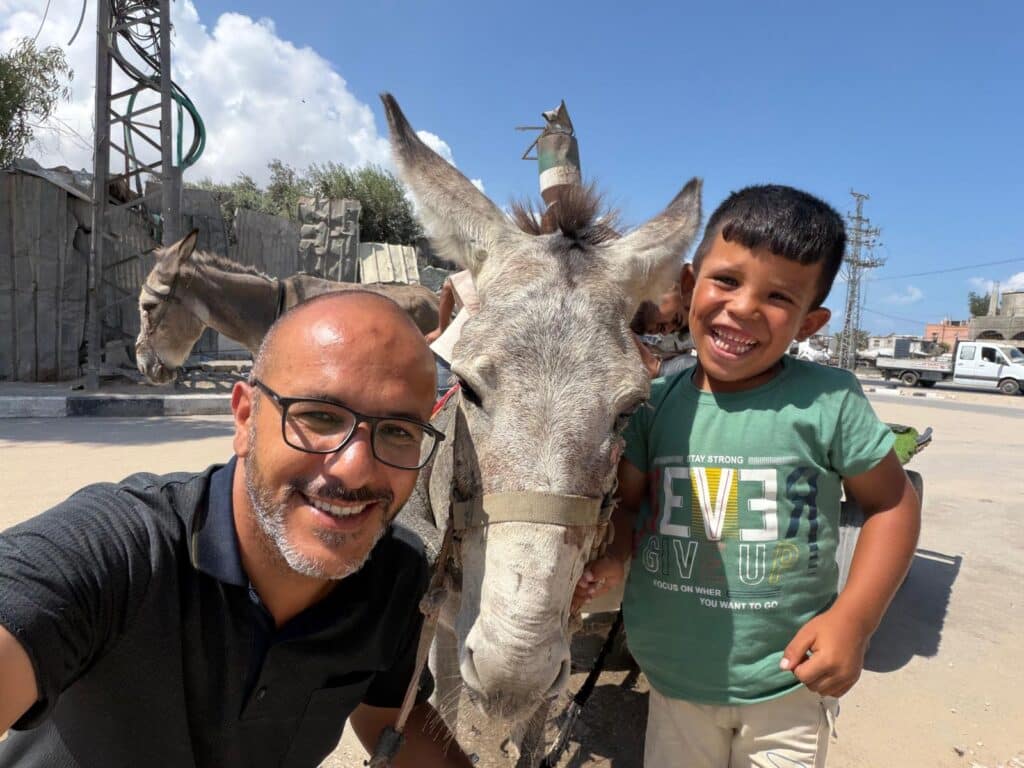
Update from Gaza – 15th October 2026
From straightforward wounds to more complicated injuries, there has been plenty to keep our Gaza team busy the last few weeks.
It’s encouraging to see wounds healing well. But for some donkeys, recovery takes longer, with regular treatment and careful checks needed along the way.
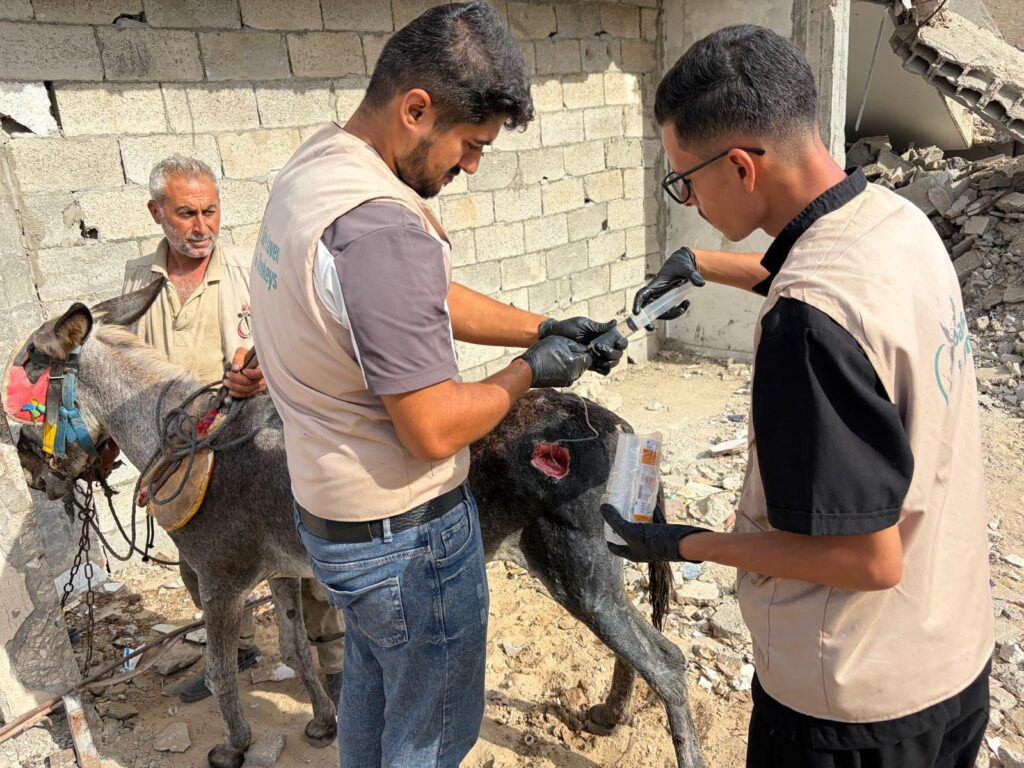
After this donkey was injured in an explosion, his owner tried to help by giving him an injection. A deep abscess developed around the injection site, and our team are continuing to treat him and monitor his recovery.
One patient still receiving treatment is an eight-year-old male donkey who was injured in a nearby explosion.
His owner tried to help him by giving him an injection himself. Sadly, by the time the donkey reached our clinic on 14 September, a deep abscess had developed in his thigh around the injection site.
He needed urgent veterinary care, so our team began treating the infection.
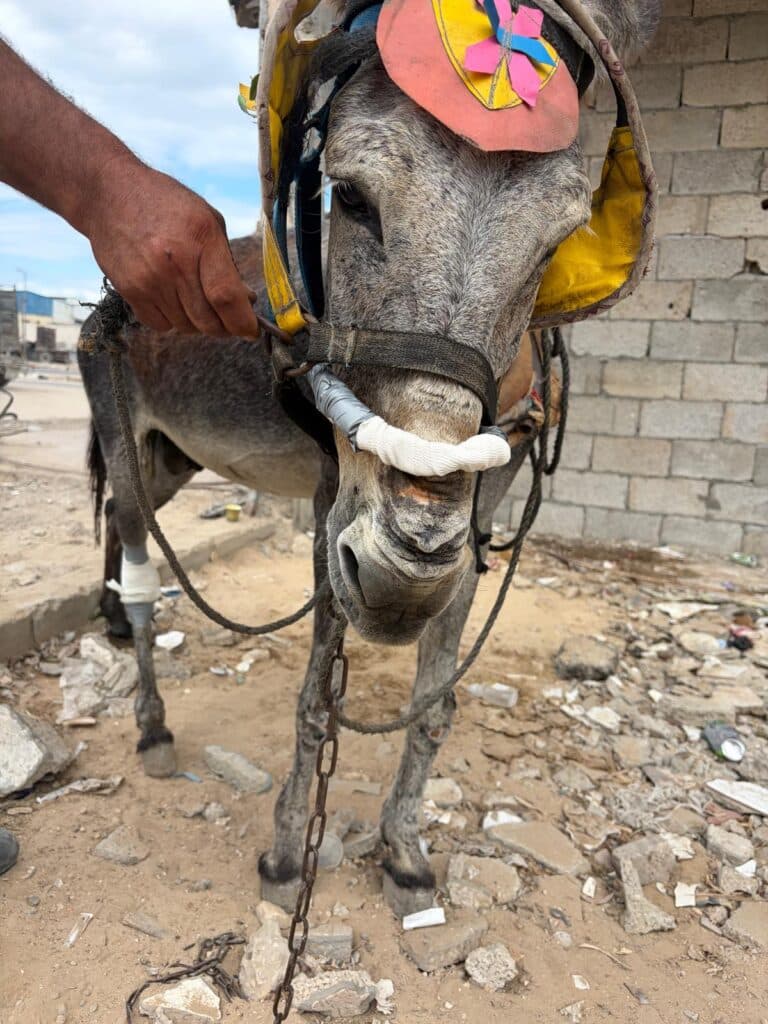
Although a difficult case for the team with the resources they have, your kindness is helping our Gaza vet team relieve pain and help donkeys like this one to heal.
Our team flushed the abscess with fluids to clean it, and used ultrasound alongside other checks to investigate how deep the infection goes.
The wound has not yet healed and there are still signs of infection, so Dr Ahmed and his team will continue treating the donkey and monitoring his recovery closely.
Our team will follow his progress closely and continue to provide the care he needs. Thank you for helping make that possible.
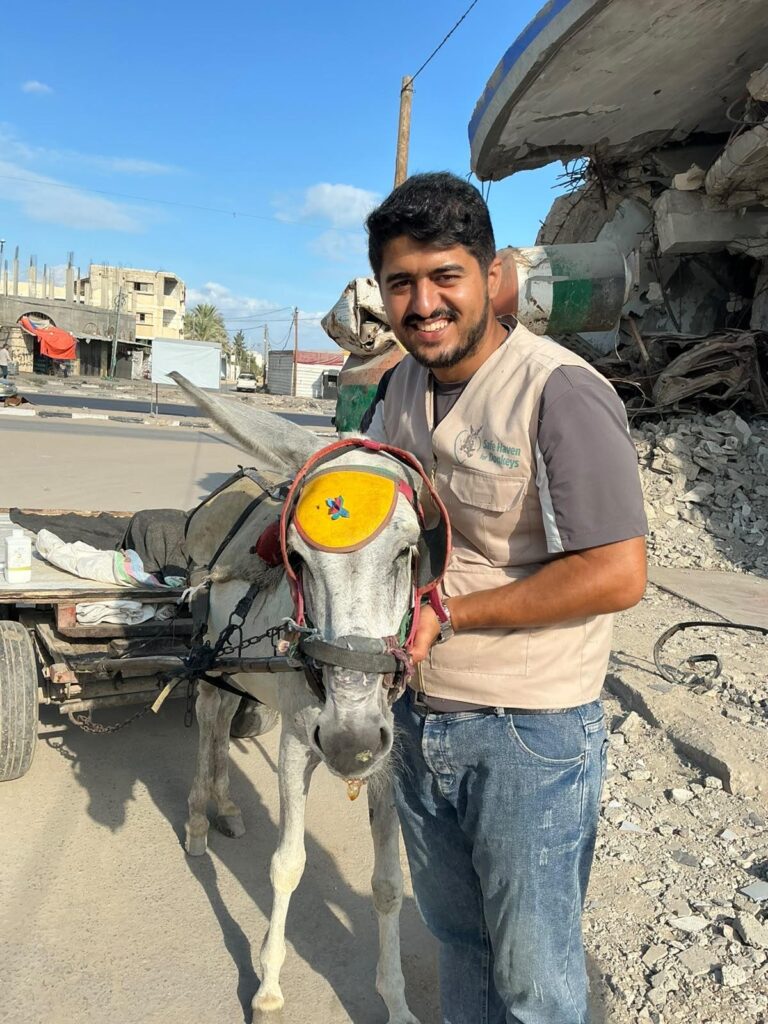
In Gaza, a donkey’s blinkers help limit distractions from the busy streets around them. Here is Dr Muath with one of his patients.
Why do working donkeys wear blinkers?
You may have spotted donkeys and horses wearing blinkers in our photographs from Gaza.
Working animals here often have to navigate crowded streets alongside people, trucks and other animals. There is a great deal happening around them.
Blinkers limit what a donkey or horse can see to the side and behind. This can help reduce distractions and make the surrounding movement less startling as they travel through busy streets.
This also helps explain the daily conditions facing Gaza’s working animals. We’re proud to be working in Gaza providing support to these wonderful animals.
Thank you ♥️♥️
SWith your help, Dr Ahmed’s veterinary team in Gaza can provide care for injured donkeys and horses.
Your generosity also helps care for rescued donkeys at our sanctuaries and brings veterinary treatment to working animals across Israel, the West Bank and Egypt.
Thank you for helping donkeys through their hardest days and giving them the chance of a healthier, more comfortable life.
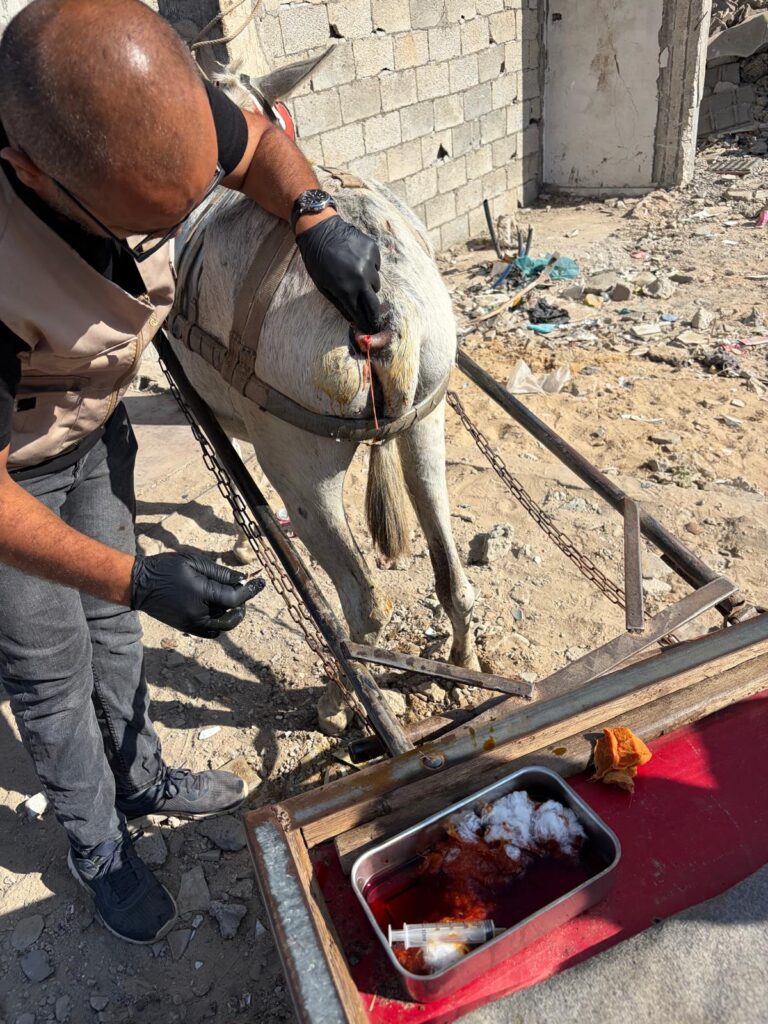
Dr Ahmed gently treats a donkey’s tail ulcer, helping to relieve pain. Your kindness helps put skilled veterinary care within reach of working animals in Gaza.